
Sex Offender Checks in Bastrop County
The Texas Public Sex Offender Registry is the main public search channel for Bastrop County. Texas DPS manages the database and receives registration data from the law enforcement agencies that register residents. Begin there for a name, address, campus, or map query. Use the full profile to compare aliases, physical details, the registering agency, the reportable offense, and status. A registry entry is a public-safety notice. It is not the complete criminal court file, and risk level alone does not tell how long registration lasts.
Local channels answer a different set of questions. The Bastrop County Sheriff registers people in unincorporated areas at 200 Jackson Street. The City of Bastrop Police Department handles its own local requirements, and people living in Elgin or Smithville should confirm the registration authority with that city's police department. When a location crosses city limits, call first. This avoids reporting to the wrong office and keeps the registry search tied to the agency responsible for verification.
Bastrop Registry Search Modes
The Texas portal presents several ways to search, each suited to a different fact. A name search helps when identity is known. Address and map modes support neighborhood awareness. The higher-education mode focuses on a campus location. Dynamic controls can change, and a CAPTCHA may appear, so do not assume a radius option will always look the same.
The official Texas registry search screen shows the current controls. View the Texas DPS registry source before using the captured interface below.
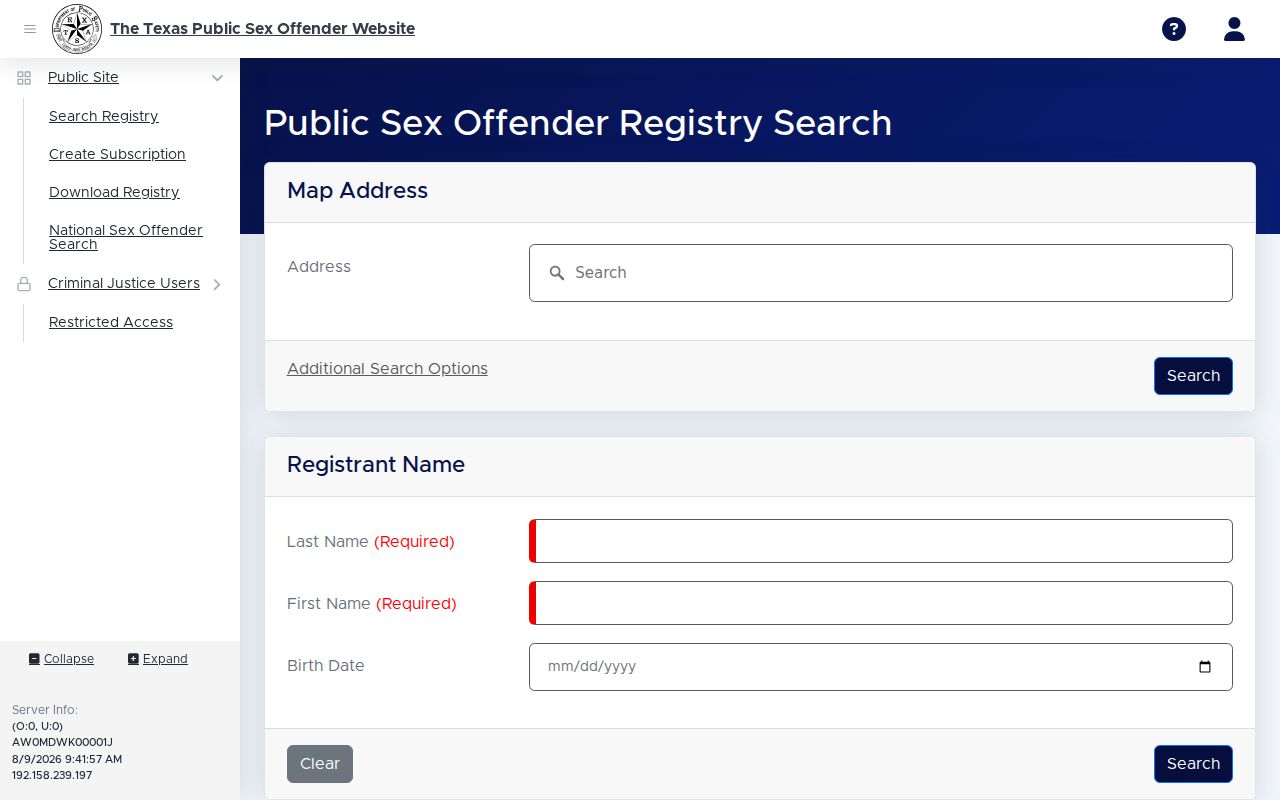
The state screen is the proper starting point because DPS publishes the public fields and the conditions that govern their use.
How to Search the Texas Public Sex Offender Registry
DPS offers free public access. Gather only the search facts you already know, then broaden or narrow the query as needed. Similar names can appear, and geographic results may include locations near a boundary. Confirm a possible match through the public profile rather than relying on a result-list line.
- Open the DPS registry, read its conditions of use, and complete any verification control shown.
- Select Name, Address, Institute of Higher Education, or Map according to the fact being checked.
- Enter the available details, run the query, and adjust the terms if the result set is too broad.
- Open the full profile. Compare aliases, description, location, offense data, registering agency, and compliance status.
| Field Label | Type | Required | Notes |
|---|---|---|---|
| Name | Search mode | Conditional | Search by a registrant's name; current subfields may change. |
| Address | Search mode | Conditional | Runs a location or proximity search from a valid address. |
| Institute of Higher Education | Search mode | Conditional | Checks around a college or university location. |
| Map | Geographic view | Conditional | Displays location-based results through the current map interface. |
| Search / Clear | Buttons | Conditional | Runs or resets the query; dynamic verification may appear. |
Bastrop and National Registry Layers
A Texas DPS query is the best state source, but it is not designed as a national search. The U.S. Department of Justice operates the National Sex Offender Public Website, or NSOPW, which sends a query across participating jurisdictions. That wider layer matters when a person recently moved, an address lies near a state line, or the available facts point beyond Texas.
The federal portal explains the multi-jurisdiction search. Review the official NSOPW source alongside this captured landing page.
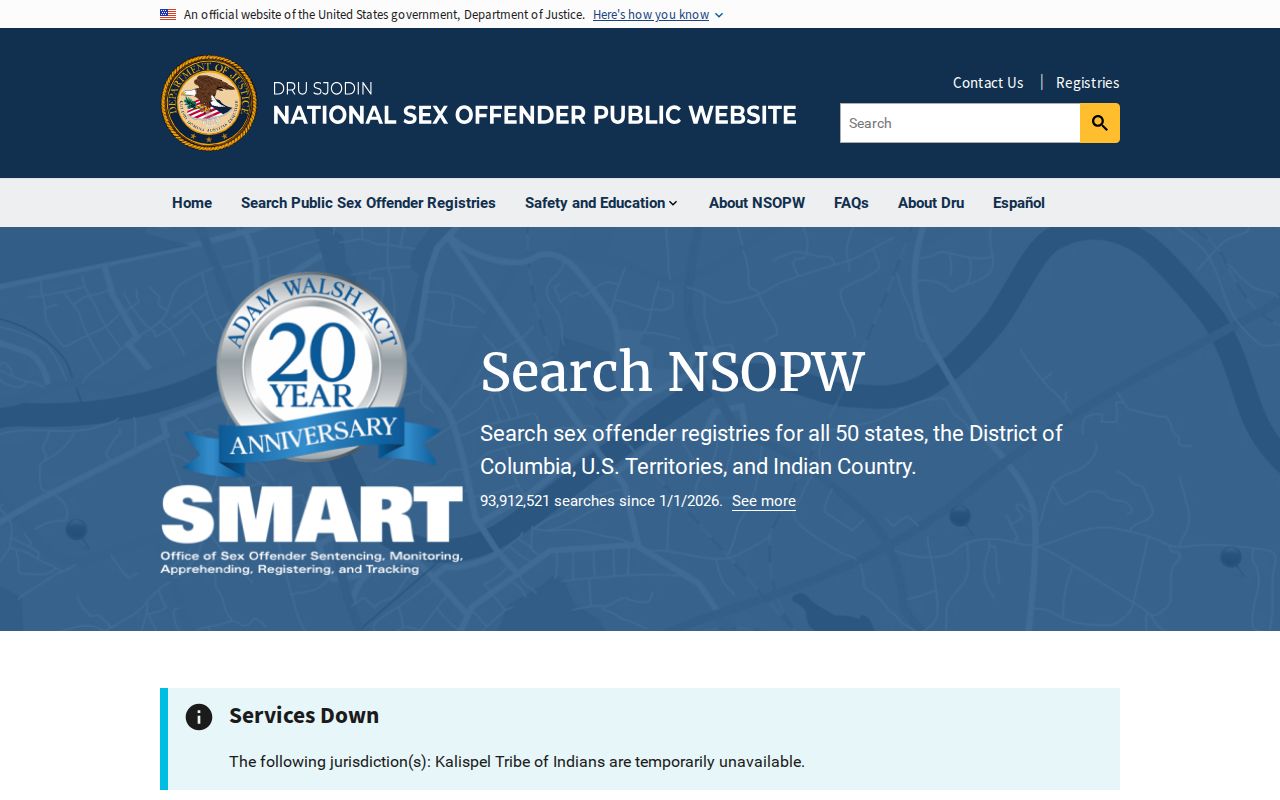
NSOPW adds reach, while DPS remains the direct source for Texas profile details and local registering-agency information.
Inside a Registry Profile
Public profiles combine identity cues, registration facts, and offense information. Read each field in context. A residence may be stated as an address or a geographic location, and the portal may display vehicles or identifying marks when allowed. The registering agency and status help identify which office should receive a question. DPS also collects protected data that Article 62.005 excludes from the public database.
| Name and aliases | Published names and alternate names used to distinguish similar records. |
|---|---|
| Photo and description | Photograph, sex, race, age or birth date, height, weight, hair, eyes, and possible marks or tattoos. |
| Residence or location | The public residence address or geographic location, plus the registering agency. |
| Offense details | Reportable offense, statute and jurisdiction, conviction date, victim age category, and punishment or supervision facts. |
| Risk level | Texas numeric risk level, which estimates danger but does not set registration duration. |
| Registration status | Registration and compliance information available through the public portal. |
Social Security and driver-license numbers, phone numbers, online identifiers, employer details, and victim-identifying information are among the data excluded from public display. A court may also order juvenile registration to remain nonpublic.
Bastrop County Registration Offices
Registration follows the person's residence jurisdiction. In unincorporated Bastrop County, the Sheriff's Office is the local channel. Its Criminal Investigations Division reports one investigator monitoring about 298 registrants across the county. That figure gives context to the local verification workload, but it should not be treated as a live count from the public portal.
Bastrop County Sheriff
200 Jackson Street
Bastrop, TX 78602
512-549-5100
SORecords@co.bastrop.tx.us
Bastrop Police Department
104 Grady Tuck Lane
Bastrop, TX 78602
512-332-8600
BPDRecords@cityofbastrop.org
The Bastrop County Sheriff contact page confirms the county office route. The City of Bastrop publishes its sex-offender requirements and child-safety-zone ordinance, while its police records contact page identifies the city records channel. Elgin and Smithville residents should contact their respective police departments rather than assume the Sheriff is the central registration office.
Jurisdiction also shapes where a change is reported. A person who moves between an incorporated city and an unincorporated address may have a different local registration authority even though DPS publishes the state record. The safest course is to contact both the current and new authority before the move deadline. Ask which office will record the change, what in-person steps apply, and when the updated location should reach the public registry. Those questions concern official compliance and should be answered by law enforcement, not inferred from a map marker.
Texas Registration Levels and Requirements
Texas uses Levels 1, 2, and 3 to describe assessed danger. The level does not decide duration. Article 62.101 generally assigns lifetime registration to listed offense categories and a period ending ten years after discharge to other reportable convictions or adjudications. Juvenile, out-of-state, and early-termination rules can alter the result. Verification timing also turns on statutory category, not simply the numbered level.
| Level / Tier | Duration | Verification Frequency |
|---|---|---|
| Level 1, low | Offense and statute control, not level | Usually annual unless another category applies |
| Level 2, moderate | Offense and statute control, not level | Usually annual unless another category applies |
| Level 3, high | Offense and statute control, not level | Usually annual unless another category applies |
People with two or more sexually violent offenses verify every 90 days, and a civilly committed sexually violent predator verifies every 30 days. Others generally verify annually. A new resident usually registers by the later of the seventh day after arrival or the first date permitted by local policy. Address and other specified changes carry in-person and seven-day duties.
Article 62 contains special paths for juvenile cases, registrations based on another jurisdiction, and possible early termination. A simple table cannot decide which path applies to one person. The profile's reportable offense and jurisdiction provide context, but a registration authority or court record supplies the governing facts. When a public profile and an older court paper seem inconsistent, note the exact field and ask the listed registering agency to confirm current status. Do not assume the lower risk number, an ended supervision term, or an old discharge date has ended registration.
Bastrop Registry Risk and Duration
A high risk label and lifetime registration are not synonyms. Risk level addresses the assessed chance of continued criminal sexual conduct. Duration comes from the reportable offense and governing law. Reading those concepts as one can distort what a Bastrop County profile says. Use the offense, statute, conviction jurisdiction, and registration status together.
State criminal-record services also explain how expunction, nondisclosure, and juvenile sealing affect criminal records. Read the official DPS record-restriction source beside the captured page.
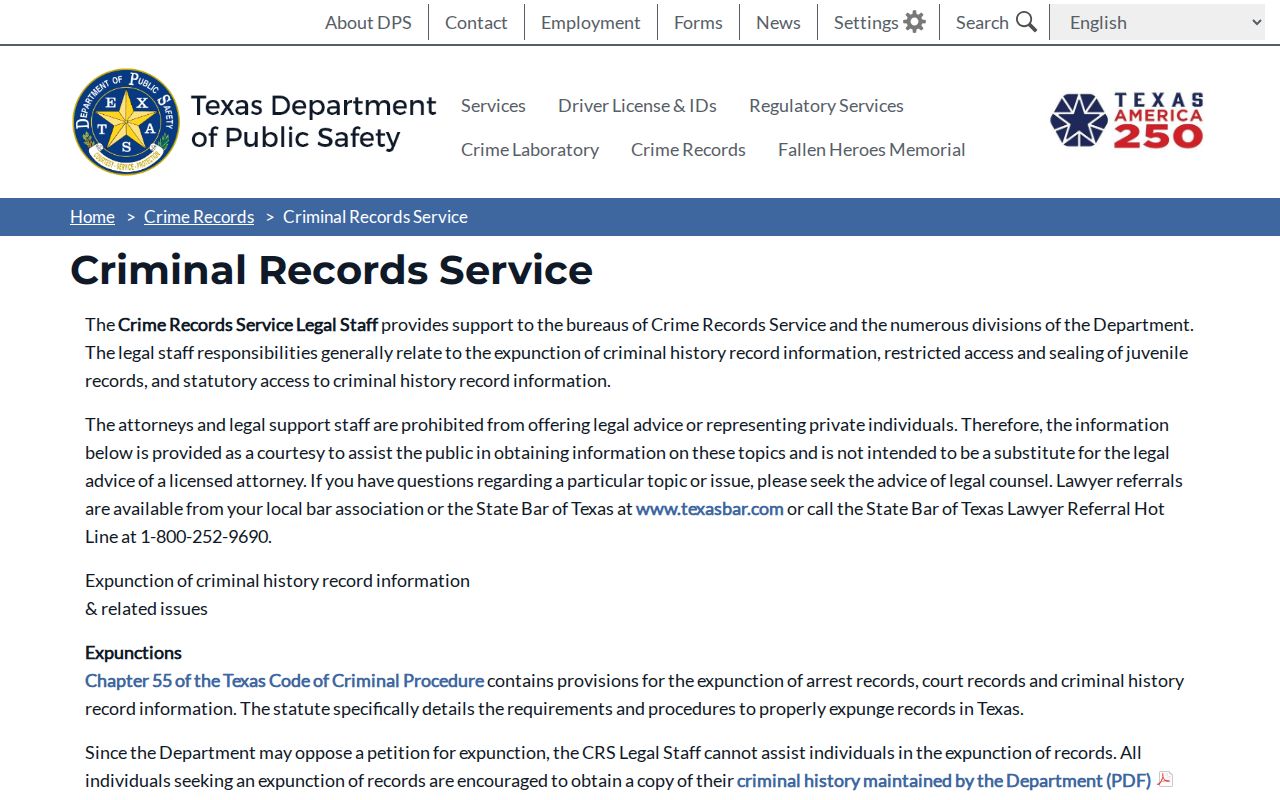
Those remedies are fact-specific and do not by themselves establish that a separate registration duty has ended.
Bastrop Registry and Supervision
Registry status, probation, and parole are separate concepts. The Texas Department of Criminal Justice Parole Division supervises people released on state parole, while the Texas Board of Pardons and Paroles makes parole decisions. A registry profile may show supervision information, but the registry is not a parole case file.
The TDCJ Parole Division source describes field supervision and office resources.
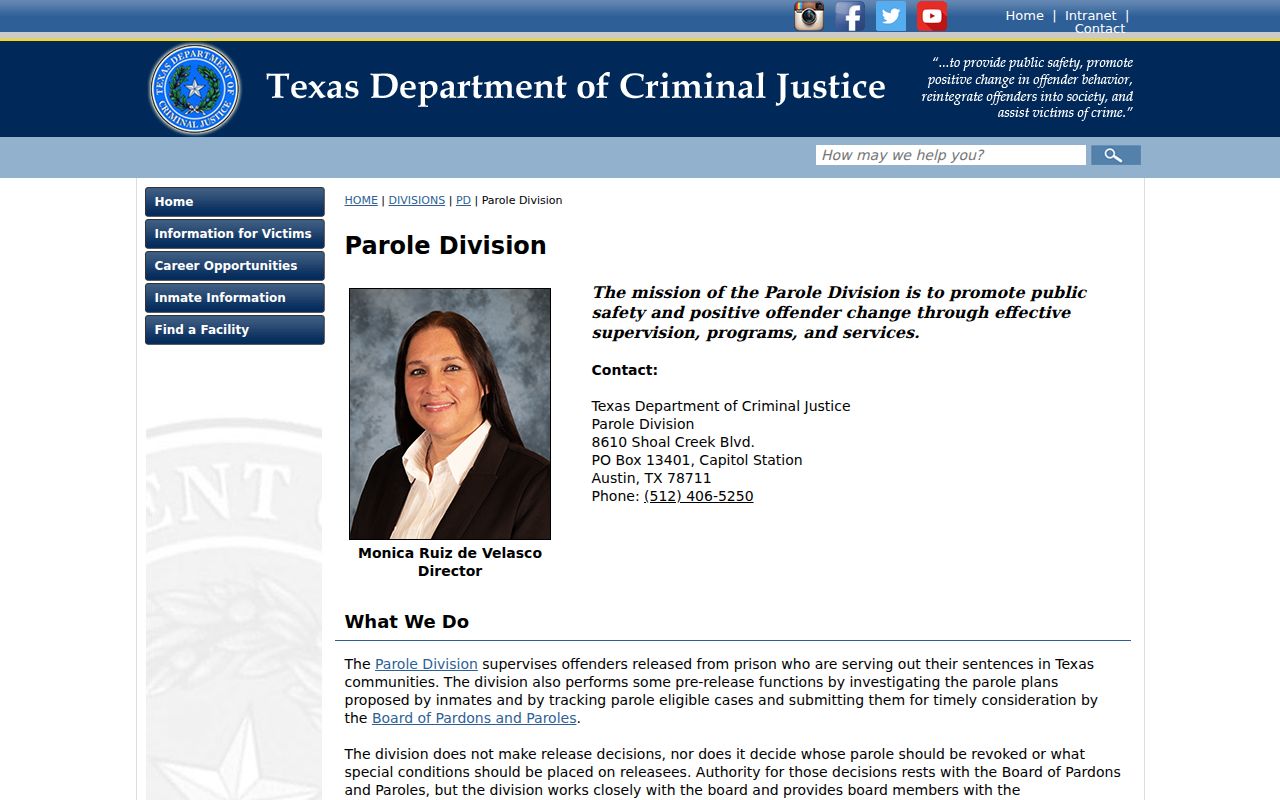
This state channel helps separate supervision questions from the local registration role of Bastrop County law enforcement.
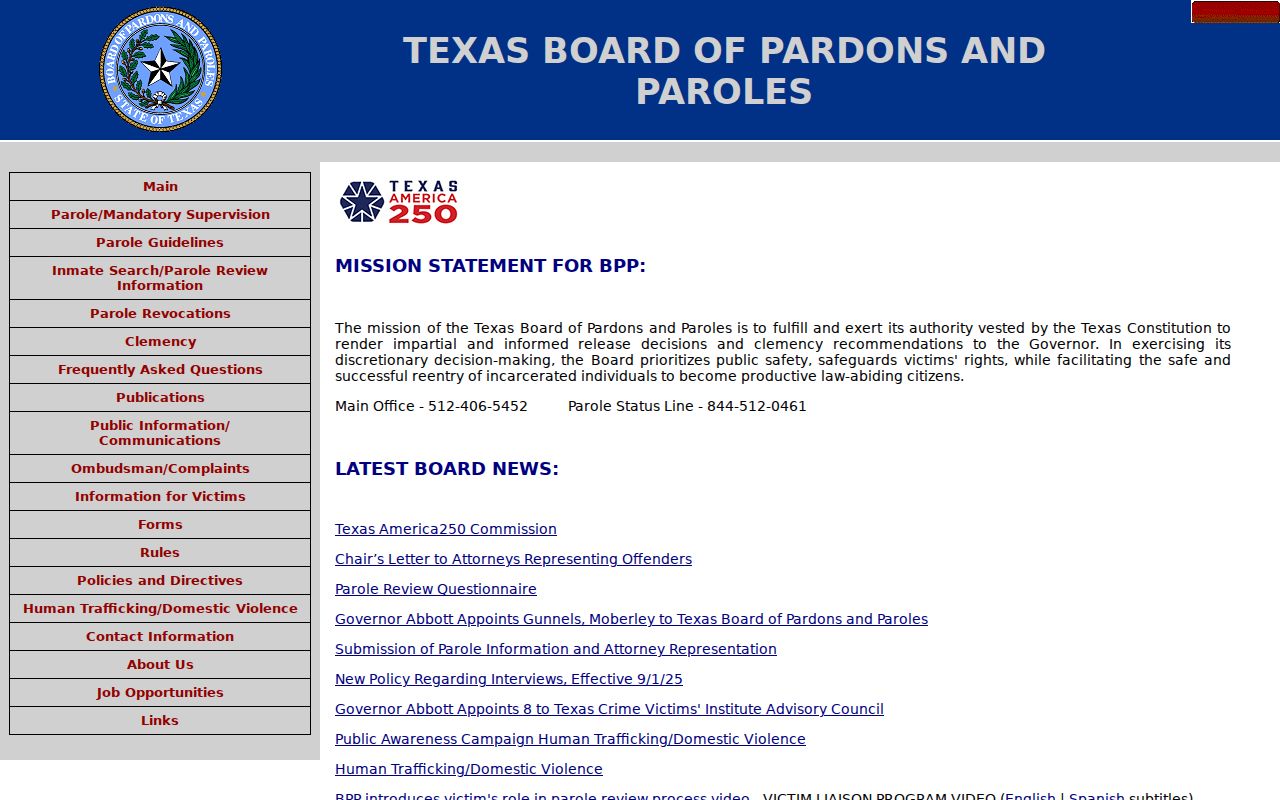
Parole decisions come from a different authority. Consult the Texas Board of Pardons and Paroles source shown below.
The distinction matters when a searcher needs current supervision information rather than public registration data.
Bastrop Registry Notifications
Texas requires postcard notice for high-risk and civil-commitment cases within set areas. Notice reaches at least non-post-office-box addresses within one mile in an unsubdivided area or three blocks in a subdivided area. DPS describes the notice as English and Spanish. These notices complement the registry. They do not replace a fresh location search.
If a listing appears noncompliant, save the public details and report the concern to the listed registration authority or the Bastrop County Sheriff. Use 911 only for an emergency. Do not visit the address, confront anyone, or try to conduct an independent compliance check.
Community Notification and Lawful Use
Chapter 62 makes specified registration facts public for awareness and safety planning. Public access does not erase privacy limits or authorize retaliation. Check the full profile, note the registering agency, and confirm questions with that office. A result should never be treated as permission to contact a registrant, members of a household, or neighbors.
Misuse is a crime: Texas Code of Criminal Procedure Chapter 62 does not authorize threats, harassment, vigilantism, discrimination, or other criminal misuse of registry information. Report suspected noncompliance to law enforcement and do not confront the person.
The official text of Texas Code of Criminal Procedure Chapter 62 defines registration duties and the public database. For a case disposition or sentence, use the clerk's court file through the Bastrop County criminal court cases channel instead.